Private label sunglasses are easier to launch when the MOQ, materials, samples, compliance documents and inspection standards are agreed before you request a final quotation.
Many buyers begin by asking, “How much does one pair cost?” However, two visually similar sunglasses can have very different production costs because of the frame material, lens specification, surface finishing, logo process, packaging and inspection standard.
This guide explains how Jioneyewear structures a private label project, from the first 3D rendering to final pre-shipment inspection.
What Is the Minimum Order Quantity for Customized Private Label Sunglasses?
The MOQ depends mainly on the frame material and production process.
| Frame Material | Jioneyewear MOQ | Color Arrangement | Best For |
|---|---|---|---|
| Acetate | 200 pieces per color | One or more colors, 200 pieces each | Premium brands, boutique collections and distinctive designs |
| TR/TR90 | 1,200 pieces total | Usually 3–4 colors | Sports, lightweight and flexible eyewear |
| PC | 1,200 pieces total | Usually 3–4 colors | Fashion collections, promotional programs and volume retail |
| Metal | 1,200 pieces total | Usually 3–4 colors | Classic, fashion and mixed-material collections |
Why Can Acetate Have a Lower MOQ?
Acetate frames are normally cut from sheets by CNC rather than injection-molded as complete frames. This allows a factory to produce a smaller quantity without developing a full injection mold.
The trade-off is a higher unit cost and longer processing time. Acetate frames require CNC cutting, tumbling, manual polishing, hinge installation, heat forming and final adjustment. These additional steps create the surface depth and premium finish buyers expect, but they also require more labor and stricter cosmetic control.
Why Do PC and TR Orders Usually Start at 1,200 Pieces?
PC and TR frames are efficient for mass production, but injection molding, color preparation, spraying, assembly and production-line setup create fixed costs.
At 1,200 pieces, those costs can be distributed across the order. Buyers can usually divide the quantity into three or four colors without paying for a completely separate development program for every color.
For a growing brand, this can create a more complete retail collection while keeping the average unit cost under control.
How Much Do Private Label Sunglasses Cost?
There is no reliable single price for private label sunglasses because the quotation is built from several specifications.

The Seven Main Cost Drivers
1. Frame Material
PC is normally chosen for cost-controlled, high-volume fashion sunglasses. TR/TR90 is often selected when flexibility, lightweight wear and sports positioning matter.
Acetate costs more because it uses sheet material and requires more manual finishing. Metal pricing depends on the base material, welding structure, polishing and plating process.

2. Lens Material and Function
A basic AC lens and a premium nylon or CR39 lens should not be compared as if they were the same product.
Common options include:
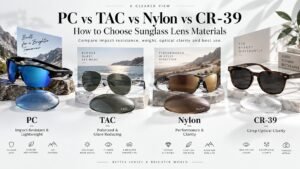
- AC lenses for price-sensitive fashion collections
- PC lenses for lightweight and impact-resistant applications
- TAC polarized lenses for driving, fishing and outdoor retail
- Nylon lenses for high-wrap sports sunglasses and premium optical clarity
- CR39 lenses for brands that prioritize visual clarity
- Glass lenses for selected classic or premium products
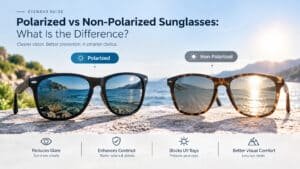
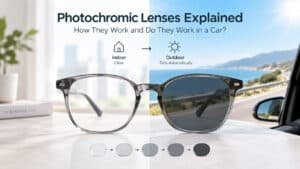
UV400, polarization, mirror coating, gradient tint, photochromic treatment, hard coating and anti-reflective treatment must be quoted separately. Polarized does not automatically mean UV400; both requirements should be confirmed and tested independently.

3. Frame and Lens Colors
Standard colors are generally more economical than an exact Pantone match.
Transparent colors, layered acetate patterns, gradient lenses, mirror coatings and highly controlled brand colors may require additional sampling and production adjustments.
4. Logo Process
A simple one-color temple print costs less than an embedded metal badge or a custom mold logo.
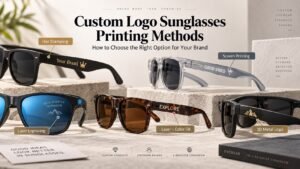
Jioneyewear can recommend silk or pad printing, laser engraving, hot stamping, metal logos, molded logos and lens logos based on the frame material, surface shape, order quantity and required durability.

5. Packaging
A microfiber pouch and cleaning cloth create a different price structure from a hard case, printed box, instruction card, barcode label and branded shipping carton.
Packaging should be quoted at the beginning of the project. Adding it after the sample has been approved can change both the cost and delivery date.

6. Tooling and Product Development
Changing only the color, lens and logo on an existing frame is less expensive than developing a new size, temple, hinge position or frame structure.
New PC or TR designs may require tooling. Acetate can avoid a complete injection mold, but the cost moves into CNC programming, materials and manual processing.
7. Testing and Inspection Level
Compliance testing, third-party laboratory fees, stricter surface tolerances, 100% finished-product inspection and special performance tests all affect the final quotation.
The lowest quotation is not always the lowest total cost. A cheaper order that creates scratches, color differences, loose lenses or online returns can cost more than a stable mid-range production program.
How Long Do Sunglasses Samples Take?
The sampling method should be selected according to the frame material and development risk. Jioneyewear normally recommends starting with a 3D prototype, especially for fully customized TR90 and PC sunglasses.
3D Prototype: Approximately 3–7 Days
For custom TR90 or PC sunglasses, the frame will normally require an injection mold before mass production. Once the mold has been completed, changing the frame width, lens shape, bridge, temple structure or hinge position can be expensive and may require mold modification or complete remaking.
A 3D prototype allows the buyer to review the design before tooling begins, including:
- Overall frame shape and proportions
- Frame and lens dimensions
- Bridge and temple structure
- Lens shape and curvature
- Logo position
- Basic wearing fit
- Visible design details
When a correction is required at this stage, the design file can usually be adjusted at a much lower cost than modifying a finished mold.
For this reason, Jioneyewear generally recommends a 3D prototype as the first sampling step. It is faster, more economical and reduces the risk of expensive tooling changes.
However, a 3D prototype cannot fully represent the final frame material, surface finish, production color, hinge resistance, lens quality or logo durability. These details should be confirmed during the later production-sample stage.
Physical Acetate Sample: Approximately 60–90 Days
Buyers developing fully customized acetate sunglasses may choose a physical sample because acetate frames are normally produced by CNC cutting rather than injection molding.
Since no complete injection mold is required, the frame shape and dimensions can be developed directly from acetate sheets. This provides a more realistic sample for checking:
- Acetate color and pattern
- Frame thickness
- CNC shape and edge details
- Polishing quality
- Front curvature
- Temple angle
- Hinge assembly
- Wearing fit
- Finished weight
- Lens installation
The trade-off is time. A custom acetate sample normally takes approximately 60–90 days because it must pass through CNC cutting, tumbling, manual polishing, hinge installation, heat forming, lens fitting and final adjustment.
Which Sampling Method Should You Choose?
For most fully customized projects, Jioneyewear recommends starting with a 3D prototype because it offers three practical advantages:
- Faster design confirmation: approximately 3–7 days
- Lower development cost: changes are made before expensive production work begins
- Lower tooling risk: especially important for molded TR90 and PC frames
A physical acetate sample is more suitable when the buyer needs to confirm the actual material, polishing, fit and finished appearance before bulk production.
The safest development process is not the one with the fewest steps. It is the one that identifies design problems before they become expensive production problems.
What Is the Production Timeline After Sample Approval?
Bulk lead time should be confirmed only after the physical sample, artwork and packaging have been approved.
As a planning reference, plastic sunglasses using an existing mold can enter production relatively quickly. The internal production guide uses approximately 25 days as a general reference for conventional plastic production, subject to color, finishing, factory capacity and packaging.
Acetate production is normally longer—often around 60–70 days—because CNC cutting, tumbling, polishing, heat forming and manual adjustment cannot be compressed in the same way as injection molding. Metal timelines are quoted according to the welding, polishing and electroplating requirements.
A realistic project plan should include:
- Specification and quotation confirmation
- 3D rendering approval
- Physical sample production
- Sample review and possible revision
- Bulk material preparation
- Frame and lens production
- Logo and packaging application
- Final inspection
- Packing and shipment
Seasonal launches should reserve production capacity early. Waiting until the physical sample is complete before discussing packaging, testing or labels can delay the launch.
What Is the Difference Between OEM and ODM Sunglasses?
The terms are related, but they describe different development responsibilities.
OEM Sunglasses
OEM, or Original Equipment Manufacturing, normally means the buyer provides the design, specification or reference sample.
The manufacturer follows the approved requirements, including:
- Frame dimensions
- Material
- Lens specification
- Colors
- Logo artwork
- Packaging
- Quality tolerances
- Target-market testing
OEM is appropriate for established brands that already have a product design or technical direction.
ODM Sunglasses
ODM, or Original Design Manufacturing, means the manufacturer contributes the existing design, product structure or development solution.
The buyer may select an existing model and customize:
- Frame and lens colors
- Logo
- Lens function
- Surface finish
- Packaging
- Selected structural details
ODM is usually faster and carries less development risk because the basic product structure has already been produced.
Jioneyewear supports both OEM and ODM projects, including existing-style customization and complete product development. The company’s current service pages list frame, lens, color, logo and packaging customization across its sunglasses collections.
Can Jioneyewear Customize the Logo, Colors and Packaging?
Yes. The depth of customization should be selected according to the budget, MOQ and launch date.
Level 1: Private Label Branding
Suitable for buyers who want to launch quickly using an existing style.
Typical options include:
- Temple logo
- Inner-temple information
- Lens logo
- Branded cleaning cloth
- Pouch or case logo
- Custom stickers and labels
Level 2: Color, Lens and Packaging Customization
Suitable for brands that need greater differentiation without developing a completely new frame.
Options can include:
- Pantone-matched frame colors
- Custom acetate colors or patterns
- Solid, gradient or mirror lens colors
- Polarized or functional lenses
- Custom cases, pouches, cloths, cards and boxes
Level 3: Full Product Development
Suitable for buyers with a clear design, sufficient budget and a long-term sales plan.
Development can include:
- New frame dimensions
- New mold or CNC frame shape
- Custom temples
- Special hinge structures
- Metal decorations
- Exclusive lens shapes
- Complete branded packaging systems
Jioneyewear offers laser, printing, hot-stamping, lens and three-dimensional logo options, together with Pantone-based color development and multiple frame and lens materials.
Which Frame and Lens Materials Are Available?
Frame Materials
PC: Cost-effective, lightweight and suitable for volume fashion programs.
TR/TR90: Flexible and lightweight, commonly used for sports, active and comfort-focused eyewear.
Acetate: Selected for richer colors, visible material depth, polishing quality and premium brand positioning.
Metal: Available for classic, aviator, rimless and mixed-material styles. Material and price depend on the required structure and finish.
CP and other plastic materials: Available for selected designs, depending on the performance, appearance and budget requirements.
Lens Materials
AC: Lightweight and economical for basic fashion sunglasses.
PC: Lightweight with good impact resistance, suitable for sports, children’s products and volume sunglasses.
TAC polarized: Reduces directional glare from roads, water and other reflective surfaces.
Nylon: Offers good toughness and is well suited to high-curvature or wraparound lenses.
CR39: Selected when optical clarity is a primary requirement.
Glass: Offers strong scratch resistance and visual quality but is heavier and must be evaluated carefully for the intended application.
The correct combination should be based on the selling channel, retail price, required function and after-sales risk—not only on the lowest material price.
Which CE, FDA, UKCA or ANSI Requirements Apply?
Compliance depends on the product’s intended use and target market. A certificate from one model should not automatically be applied to a different lens, frame structure or safety claim.
CE for the European Union
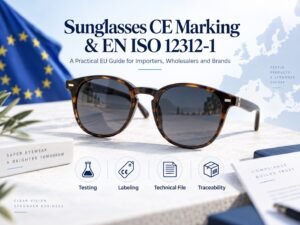
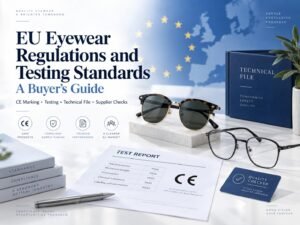
General-use sunglasses are treated as Category I personal protective equipment because they protect the eyes from sunlight. The compliance route is based on Regulation (EU) 2016/425, with EN ISO 12312-1 used for general-use sunglasses. The applicable harmonized edition should be confirmed with the test laboratory when the project begins because the EU updates its listed standard references.
A normal CE project may require:
- Laboratory test report
- Risk assessment
- Technical documentation
- EU Declaration of Conformity
- Product and packaging markings
- User information where applicable
FDA Requirements for the United States
“FDA certified sunglasses” should not be used as a vague marketing claim.
Sunglasses are exempt from a 510(k) submission, but FDA registration, device listing and importer or U.S. agent obligations may still apply. More importantly, sunglasses lenses sold in the United States must meet the impact-resistance requirements of 21 CFR 801.410. FDA guidance also states that a compliance certificate should accompany each imported lot.
UKCA and CE for Great Britain
Great Britain currently recognizes CE marking alongside UKCA marking for many regulated product categories, including PPE. A buyer may therefore choose the appropriate conformity route based on the product, documentation and supply-chain arrangement.
Northern Ireland has different rules and should be reviewed separately.
ANSI for Safety Sunglasses
ANSI Z87 is not a standard for ordinary fashion sunglasses.
The current ANSI/ISEA Z87.1-2025 standard covers occupational and educational eye and face protection. A product should only be sold as ANSI Z87 safety eyewear when the specific model has completed the relevant tests and carries the required permanent markings.
Jioneyewear can support compliance-focused safety eyewear projects, but the test plan must be confirmed according to the model, lens, intended hazard and target market.
How Does Jioneyewear Inspect Sunglasses Before Shipment?
A useful QC promise should explain what is checked. “We have inspectors” is not enough.
Jioneyewear’s inspection workflow converts the approved sample and specification sheet into measurable checking points.
1. Material and Order Verification
Inspectors confirm:
- Correct frame material
- Correct lens material and function
- Approved color combinations
- Order quantity by model and color
- Correct logo and packaging version
2. Frame Appearance
The inspection checks for:
- Scratches, pits and visible molding marks
- Uneven paint or plating
- Color differences
- Rough edges or remaining flash
- Poor polishing
- Incorrect front curvature
Cosmetic tolerances should be agreed before production. The central visible area, peripheral area and concealed areas should not be judged by one vague standard.
3. Lens Inspection
Inspectors check:
- Left and right lens color consistency
- Gradient height and position
- Visible scratches, pits or coating defects
- Optical clarity and obvious distortion
- Polarization direction where applicable
- Mirror-coating uniformity
- Lens fit, edge damage and assembly stress
4. Structure and Assembly
The inspection covers:
- Temple opening and closing
- Hinge and screw stability
- Left-right balance
- Frame closure
- Lens looseness
- Nose-pad installation
- Temple alignment
- General wearing position
5. Logo Inspection
Each logo is checked against the approved artwork for:
- Position
- Size
- Direction
- Color
- Edge clarity
- Missing print or double image
- Adhesion and wear resistance
- Batch consistency
6. Packaging Inspection
The final check verifies:
- Correct case, pouch and cloth
- Barcode and label information
- Product quantity per inner box
- Carton markings
- Protection during transportation
- Mixed-model or mixed-color errors
7. Compliance Markings and Documents
For regulated products, the team confirms that required markings, reports, declarations and lot documents correspond to the actual product being shipped.
Finished-pair appearance and assembly checks can be conducted across the full order, while destructive performance tests and regulatory tests are completed using approved sampling methods or accredited laboratories.
The result is not a promise that defects are impossible. It is a controlled process designed to stop visible, functional and documentation errors before they reach the buyer.
Start with the Right Private Label Plan
A premium acetate collection with a 300-piece-per-color MOQ solves a different business problem from a 1,000-piece PC or TR collection divided into four commercial colors.
Before requesting a quotation, confirm five points:
- Target country
- Sales channel and retail price
- Required frame and lens materials
- Customization depth
- Expected launch date
Jioneyewear can then prepare three practical options: a lower-risk launch plan, a standard private label plan and a volume production plan.
Send your reference design, quantity, target market and required launch date to receive a material recommendation, sample schedule and itemized quotation.