The eyewear sample development process helps brands turn product ideas into production-ready samples before bulk manufacturing. It usually includes design review, material selection, prototype development, assembly, inspection, and final sample approval. For buyers, the key goal is to confirm the frame structure, dimensions, colors, lens specifications, logo details, and overall product quality before starting mass production.
What Is an Eyewear Pre-Production Sample?
In eyewear manufacturing, not all samples serve the same purpose. Understanding the distinction is crucial for controlling your timeline:
Reference Sample: An off-the-shelf model from our existing catalog. Used purely to evaluate our factory’s general craftsmanship, hinge quality, and acetate/metal polishing standards before you commit to custom designs.
Development Sample (Prototype): The first physical version of your custom technical package, typically created using 3D printing. It is used to evaluate the frame shape, basic structure, and overall physical appearance.
Pre-Production Sample (Golden Sample): The ultimate benchmark. Produced using the exact bulk materials (e.g., Mazzucchelli acetate), actual production molds, specific Pantone colors, and finalized logos. Before production starts, buyers should approve this sample to reduce differences between the approved product and the final shipment.
What Buyers Should Prepare Before Sampling
To prevent costly revisions and delays, brand owners must provide complete specifications. Here is what Jion Eyewear requires to begin:
Tech Pack or Reference Pictures: Professional 2D/3D CAD files are ideal. If a tech pack is unavailable, buyers can provide reference images or existing samples.
Frame Dimensions: Important dimensions include: Important measurements include: lens width, bridge width, temple length, and frame front width. Incorrect dimensions may cause fitting problems during production.
Frame Material: Specify the exact material (e.g., Acetate, TR90, Stainless Steel, Titanium, or PC). Different materials require different processing methods and may affect customization options.
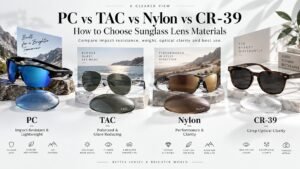
Lens Specification: Material (CR39, Nylon, PC), base curve, polarization requirements, UV400 standard, and AR (Anti-Reflective) coatings.
Pantone Colors: For custom colors, buyers should provide Pantone references whenever possible. This helps manufacturers match: Frame colors, Temple colors, Logo colors. Color confirmation is especially important for private label eyewear projects.
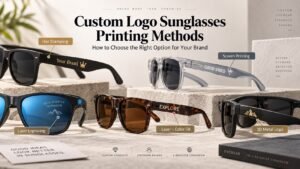
Logo Position and Method: Vector logo file (.AI or .PDF), preferred customization method (laser engraving, screen printing, hot stamping, or metal logo), and confirmation of logo placement.
Packaging Requirements: This ensures the folded frame dimensions fit perfectly into your custom cases.
Target Market and Compliance: Let us know if the frames need to pass specific drop-ball tests (FDA), CE, or UKCA standards. This helps manufacturers recommend suitable materials and product structures.

The 8-Step Eyewear Sample Development Process
Step 1 – Requirement and Feasibility Review
Our engineering team reviews your tech pack. We comprehensively evaluate the feasibility of product concepts based on design complexity, material feasibility, and component availability. Early feasibility reviews help buyers avoid unnecessary development costs.
Step 2 – Sample Quotation and Cost Confirmation
We provide a transparent cost breakdown, covering prototype development, mold costs, material preparation, lens development, logo application, and packaging samples. Buyers should confirm the desired level of customization before proceeding to the next step.
Step 3 – 2D Drawing or 3D Design
Jion Eyewear converts your brief into a precise CAD drawing. You will review the digital blueprint for dimensions and angles before any physical material is cut.
Step 4 – Material and Color Confirmation
We will locate the acetate color swatch you requested (or identify the Pantone color code for injection-molded frames) and submit it for your approval to ensure the actual color meets your expectations.
Step 5 – Existing Mold, Prototype or New Tooling
For Acetate: We use CNC machines to carve the frame front and temples. For TR90/PC: We either 3D print a rough prototype for size checking or open the actual steel injection mold. For Metal: Wire cutting and welding processes begin based on the technical drawing.
Step 6 – Lens, Logo and Component Assembly
Lenses are cut and fitted. Temples are attached using specified hardware (e.g., OBE reinforced hinges). The logo is applied via your chosen method.
Step 7 – Sample Quality Inspection
Before shipping, our QC team checks the sample against the CAD file. We test hinge smoothness, surface polishing consistency, and lens fit integrity.
Step 8 – Golden Sample Approval
The sample is shipped to your office. Once you sign off, this becomes the “Golden Sample.” Bulk production will identically mirror this unit.

Sample Timeline by Development Route
Sample timelines depend on product complexity, material availability, tooling requirements, and revision rounds.
The following timeline should be confirmed according to each project requirement.
| Development Route | Typical Situation | Estimated Timeline |
|---|---|---|
| Existing Model Modification | Existing frame with changes to color, lens, logo, or packaging | 5 – 7 Days |
| New Color Development | Existing molds available; frame or lens colors can be customized. | 20 – 30 Days |
| New Material Combination | Existing design using different materials or components | 30 – 45 Days |
| Full Custom Mold Development | Opening brand-new steel tooling for TR90, PC, or Metal custom frames. | 45 – 60 Days |
Note: Actual sample timelines vary based on design requirements, tooling needs, material preparation, and approval speed.

What Determines Eyewear Sample Cost?
Eyewear sample cost depends on the level of customization required.
Mold Development
New frame designs may require tooling investment.
Existing molds usually reduce development cost compared with completely new structures.
Materials
Material choice affects sample cost.
Examples:
- Standard PC or TR90 frames
- Acetate sheets with special colors
- Metal components
- Titanium structures
Lens Requirements
Lens customization may affect cost based on:
- Lens material
- Coating
- Color
- Function
Logo Customization
Different logo methods have different setup requirements.
Examples:
- Pad printing
- Laser engraving
- Metal logo
- Lens logo
Colors
Custom Pantone colors may require additional development work, especially for special materials.
Packaging
Custom boxes, cases, and accessories can increase sample development cost.
Revision Times
More sample modifications usually require additional development time and cost.
Providing complete specifications before sampling helps reduce unnecessary revisions.
Eyewear Sample Approval Checklist
When you receive the prototype from Jion Eyewear, use this standard B2B checklist to evaluate it:
[ ] Dimensions: Do they exactly match the approved CAD drawing?
[ ] Frame Color: Does it match the target Pantone/Swatch under sunlight?
[ ] Lens Color & Spec: Is the tint correct? Are the UV/Polarized features present?
[ ] Logo Position: Is it centered, properly scaled, and cleanly applied?
[ ] Hinge Operation: Do temples open and close smoothly without wobble?
[ ] Surface Finish: Is the acetate high-gloss (tumbled for 30+ days) or matte as requested? Are there any tooling marks?
[ ] Lens Fit: Are there gaps between the lens and the frame rim?
[ ] Packaging: Does the frame fit inside your intended case when folded?
[ ] Visible Defects: Check for scratches, bubbles, or asymmetry.
[ ] Approved Reference Sample: Ready to be signed and sealed for bulk production?
Common Causes of Sample Delays
Avoid these common pitfalls to keep your product launch on schedule:
Incomplete Tech Packs: Missing dimensions or material specs halt engineering.
Low-Resolution Logos: Providing JPGs instead of Vector (.AI/.PDF) files delays mold creation.
Mid-Process Color Changes: Changing Pantone codes after material sourcing has begun requires restarting Step 4.
Unclear Target Standards: Without clear expectations for quality, appearance, and market requirements, more revisions may be needed.
Frequently Asked Questions
1. How long does an eyewear sample take?
Typically 60 to 90 days for acetate/metal CNC samples, and 45 to 60 days if new injection molds are required. The specific timeframe depends on product design, material selection, mold requirements, and the number of revision rounds.
2. How much does a custom eyewear sample cost?
CNC acetate samples range from $100-$300. Injection molded frames (TR90) can cost $800-$2000+ due to the steel mold creation.
3. Can an existing frame mold be customized?
Yes. You can use our existing molds and customize the frame color, lens specs, and branding to save on tooling costs and time.
4. How many sample revisions are included?
Standard quoting covers one physical sample based on the approved 2D/3D drawing. If the physical sample matches the CAD but you want to change the design, a new sampling fee applies.
5. What is a golden sample?
It is the final, approved pre-production sample. The factory keeps one perfectly matched unit, and you keep the other. It acts as the legal quality standard for the mass production run.
6. When can bulk production begin?
Production scheduling begins immediately after you sign off on the Golden Sample and place the mass production deposit.
Start Your Custom Eyewear Sample Project
A successful eyewear project starts with a clear sample development plan.
Whether you are modifying an existing frame or developing a completely new design, preparing accurate specifications helps reduce communication time and production risks.
Jioneyewear supports OEM and ODM eyewear development, including product customization, logo application, lens options, packaging customization, and sample approval support.
Send your tech pack, reference images, target quantity, and customization requirements. We can help review your project direction and suggest suitable development options.