OEM vs ODM eyewear manufacturing depends on whether a buyer needs a fully customized design or a faster launch using existing factory-developed models. OEM is suitable for brands with their own product concepts, while ODM helps startups and retailers test markets with lower development requirements.
To protect your margins and hit your launch dates, you need to understand the exact differences between OEM vs ODM eyewear manufacturing.
Both manufacturing models can help you launch sunglasses, optical frames, sports eyewear, or safety glasses, but they serve different business goals. Choosing the wrong model may increase development costs, delay your launch, or limit future product expansion.
This guide explains how OEM and ODM eyewear manufacturing differ, compares their costs, customization options, and timelines, and helps you determine which solution fits your business stage.
What Is OEM Eyewear Manufacturing?
OEM (Original Equipment Manufacturing) means we build your exact design from the ground up. You provide the tech packs, CAD drawings, and material specifications; we provide the manufacturing muscle.
-
The Scenario: You have an original eyewear design and need a factory that can manufacture it with 1:1 precision, ensuring every curve, dimension, and structural detail is produced exactly as specified.
-
The Benefit: 100% intellectual property ownership. Nobody else in the market will have your frames. You control every millimeter of the design, ensuring your brand stands out in a crowded premium market.

In an OEM project, your brand usually provides some or all of the following:
- Original frame design
- Technical drawings or 3D files
- Material requirements
- Lens specifications
- Brand identity and logo
- Packaging requirements
The manufacturer is responsible for turning your design into finished products while meeting your quality requirements.
OEM Is Suitable For
- Established eyewear brands
- Designers with proprietary collections
- Businesses developing exclusive products
- Companies protecting unique product designs
If your goal is to build a recognizable eyewear collection that competitors cannot easily copy, OEM is usually the preferred option.
What Is ODM Eyewear Manufacturing?
ODM (Original Design Manufacturing), often called Private Label, means you select pre-designed frames from our factory catalog and rebrand them as your own.
The Scenario: You don’t have an in-house design team. Instead of developing a new frame from scratch, you simply want to select proven best-selling eyewear styles and launch them under your own brand.
The Benefit: Speed to market. By choosing ODM, you skip the R&D phase entirely. We apply your logo to the temples, customize the lens colors, and print your branded packaging. You can start selling in weeks, not months.

In an ODM project, instead of creating a frame from scratch, buyers select from available styles and customize selected elements.
Common customization options include:
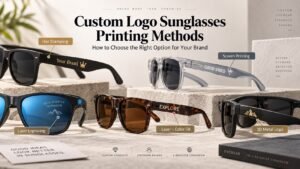
- Logo printing or engraving
- Frame colors
- Lens colors
- Polarized or UV400 lenses
- Packaging
- Labels
- Accessories
This approach significantly reduces development time because the product structure has already been tested.
ODM Is Suitable For
- Startup eyewear brands
- Wholesalers
- Importers
- Retail chains
- Online sellers
- Amazon and Shopify businesses
Many successful eyewear brands begin with ODM collections before investing in fully customized OEM products after identifying their best-selling styles.
OEM vs ODM Eyewear Comparison Table
| Feature | OEM Manufacturing | ODM Manufacturing |
|---|---|---|
| Product Design | Customer creates the design | Manufacturer provides existing designs |
| Product Exclusivity | High | Shared platform with customization |
| Development Cost | Higher | Lower |
| Mold Development | May be required | Usually not required |
| Sampling Time | Longer | Shorter |
| Production Lead Time | Generally longer | Generally shorter |
| Initial Investment | Higher | Lower |
| Brand Differentiation | Excellent | Moderate |
| Product Launch Speed | Slower | Faster |
| Best For | Established brands | Startup brands and market testing |
Quick Summary
Choose OEM if exclusivity and long-term product differentiation are your priorities.
Choose ODM if you want to enter the market quickly while reducing investment risk.
Which Option Is Better for Startup Eyewear Brands?
Many entrepreneurs assume they need fully custom products from day one. In reality, that is not always the most practical approach.
For many startup brands, launching quickly and validating customer demand is often more valuable than developing an entirely new frame.
A practical growth path looks like this:
Stage 1 — Test the Market
Select proven frame designs.
Customize:
- Logo
- Colors
- Lens options
- Packaging
Collect customer feedback and identify your best-selling products.
Stage 2 — Build Your Brand
Expand successful collections.
Add more customized details such as:
- Exclusive color combinations
- Premium packaging
- Custom accessories
Strengthen your brand identity while maintaining manageable inventory.
Stage 3 — Develop OEM Products
Once sales data confirms market demand, invest in exclusive frame development.
This phased approach helps reduce sourcing risks while building a stronger product portfolio over time.
MOQ, Cost, Sample Time, and Customization Differences
The following comparison provides a general overview. Actual requirements vary depending on product complexity and customization.
| Factor | OEM | ODM |
|---|---|---|
| Product Development | Full custom | Existing design |
| Initial Investment | Higher | Lower |
| Sample Development | More engineering work | Faster sample preparation |
| Customization Flexibility | Very high | Moderate |
| Launch Speed | Longer | Faster |
| Suitable Order Volume | Usually larger projects | Suitable for market testing |
Before placing an order, buyers should also confirm:
- Material selection
- Lens specifications
- Logo application method
- Packaging requirements
- Quality standards
- Estimated production schedule
Clarifying these details early helps reduce revisions during sampling.
How Jion Eyewear Supports OEM and ODM Projects
Whether you are launching your first private label collection or scaling an established brand, Jion Eyewear eliminates the typical headaches of overseas sourcing. We specialize in Acetate, TR90, Metal, and PC frames.
-
For ODM Buyers: Access our library of hundreds of market-tested designs. We handle laser engraving, custom pad printing, and custom packaging so you can launch in under 30 days.
-
For OEM Buyers: We sign strict NDAs to protect your IP. Our engineers turn your 2D sketches into 3D CAD models, ensuring precise execution of complex components like OBE reinforced hinges and multi-layer acetate lamination.
Quick Buyer Decision Guide
| Buyer Situation | Recommended Option |
|---|---|
| Launching a new eyewear brand | ODM |
| Testing new product categories | ODM |
| Selling on Amazon or Shopify | ODM |
| Building an exclusive designer collection | OEM |
| Protecting proprietary product designs | OEM |
| Expanding an established eyewear brand | OEM |
Frequently Asked Questions
Is OEM better than ODM?
Neither is universally better. OEM offers greater product exclusivity, while ODM provides a faster and more cost-effective route to market. The right choice depends on your business goals.
Can I modify an ODM design to make it slightly different?
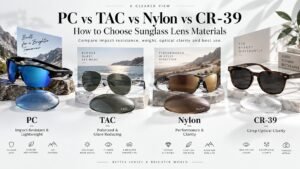
Yes. This is often called “ODM+”. You can change lens types (e.g., polarized TAC vs Nylon), frame colors, and metal accents without paying for entirely new molds..
Do you sign Non-Disclosure Agreements (NDAs) for OEM projects?
Absolutely. We protect our clients’ intellectual property strictly. Your custom CAD files and designs will never be shown to other buyers or displayed in our public catalog.
Which option is better for a first-time eyewear brand?
For many first-time brands, ODM provides a practical way to launch products, gather market feedback, and build sales before investing in custom OEM development.
Can I switch from ODM to OEM later?
Yes. Many brands start with ODM to validate demand and later develop exclusive OEM collections based on proven sales data.
Conclusion
Choosing between OEM vs ODM eyewear manufacturing is not about selecting one model over the other—it is about choosing the approach that aligns with your current business stage.
If your priority is speed, lower development costs, and market validation, ODM offers a practical starting point. If your goal is to build exclusive products and strengthen long-term brand value, OEM provides greater design freedom and product differentiation.
Many successful eyewear brands combine both strategies—starting with ODM to test demand and moving to OEM as their business grows.
Planning your next eyewear collection?
Send us your target market, product category, estimated quantity, and logo file. Our team can help you evaluate whether OEM or ODM is the better fit for your project and recommend suitable customization options based on your business goals.